
"frost impact coffee"
500 article(s) found

Introduction of Brazilian Coffee Flavor Brazilian Coffee Brand in Brazilian Coffee Manor
The Brazilian Special Coffee Association (BSCA), which has many of Brazil's most important regional members, represents the interests of the world's top coffee growers and the most advanced coffee production technology. In Missouri, for example, production has soared in the central region of Serrado over the past few years. Here, the vast area

Coffee Culture-the History of Instant Coffee
The history of instant coffee in 1901, instant coffee was invented by SaetoriKato, a Japanese scientist working in Chicago, USA. GeorgeConstantLouisWashington invented the technology for mass production of instant coffee and introduced it to the market in 1910
Introduction of boutique coffee-Brazilian coffee
Know the taste of Brazilian coffee with a low sour taste, with the sweet and bitter taste of coffee, the entrance is very smooth, but also with a hint of grass aroma, slightly bitter in the fragrance, smooth and smooth, the aftertaste can make people comfortable and pleasant. Brazilian coffee generally refers to coffee produced in Brazil. There are many kinds of Brazilian coffee, most of which are unwashed and sun-dried.
Boutique coffee beans produced in Papua New Guinea
In Papua New Guinea, about 75 per cent of coffee products come from small local farmers
Coffee beans Oceania Papua New Guinea
The legendary background of modern coffee. In Papua New Guinea, about 75 per cent of coffee products come from small local farmers

A comprehensive introduction of Brazilian coffee beans Central American region
Brazils to distinguish it from Milds coffee. The vast majority of Brazilian coffee is unwashed and sun-dried and is classified according to the name of the state of origin and port of transport. Brazil has 21 states and 17 states produce coffee, but four of them produce the largest, accounting for 98% of Brazil's total output. They are: Parana, SaoPaulo and Milas.
Introduction of Coffee Encyclopedia Coffee
The kind of coffee [preface]: when tasting individual coffee, you will see some information about the variety in addition to the producing country, producing area, geographical and climatic conditions. Such as Arabica, Robusta, Bourbon and so on. As far as the flavor of coffee is concerned, the difference in producing areas certainly has a greater impact on the flavor of coffee. When it comes to different varieties of beans produced in the same place, the differences between varieties change.

Introduction and characteristics of Brazilian Coffee
Brazil is vividly compared to the giant and monarch of the coffee world. There are about 3.97 billion coffee trees there, and small farmers now grow 75% of Brazil's total coffee production. The number of coffee producers in Brazil is twice or even three times that of Colombia, the second largest coffee producer in the world. Unlike in the past, Brazil's economy is less dependent on coffee.
Papua New Guinea, Papua New Guinea
The legendary background of modern coffee. In Papua New Guinea, about 75 percent of coffee production comes from small-scale, local farmers

Introduction of Brazilian Coffee Flavor, taste, Brazilian boutique coffee beans
Although the variety of Brazilian coffee is diverse, Brazilian coffee is suitable for the taste of the public. For example, coffee produced in the northern coastal areas has a typical iodine taste, reminiscent of the sea after drinking. This coffee is exported to North America, the Middle East and Eastern Europe. Another kind of coffee that is interesting and worth looking for is washed Bahia. This kind of coffee is not easy.

Boutique Coffee Papua New Guinea Coffee Manor
The legendary background of modern coffee. In PapuaNewGuinea, about 75 per cent of coffee products come from small local farmers

Brazilian coffee generally refers to coffee produced in Brazil.
Brazilian coffee generally refers to coffee produced in Brazil. There is a wide variety of Brazilian coffee, the vast majority of which are unwashed and sun-dried, classified according to the name of the state of origin and the port of transport. Brazil has 21 states and 17 states produce coffee, but four of them produce the largest, accounting for 98% of the country's total output. Brazilian coffee has a low sour taste, which goes well with coffee.
Boutique Coffee Papua New Guinea Coffee Manor
The legendary background of modern coffee. In Papua New Guinea, about 75 per cent of coffee products come from small local farmers
Boutique Coffee Papua New Guinea Coffee Manor
The legendary background of modern coffee. In Papua New Guinea, about 75 per cent of coffee products come from small local farmers

Description of Price and Flavor of single Coffee Bean in Brazil introduction to the characteristics of varieties and Grinding scale
The price of Brazilian coffee beans Brazil is vividly compared to the giant and monarch of the coffee world. There are about 3.97 billion coffee trees there, and small farmers now grow 75% of Brazil's total coffee production. The number of coffee producers in Brazil is twice or even three times that of Colombia, the second largest coffee producer in the world. Unlike in the past, Brazil is now
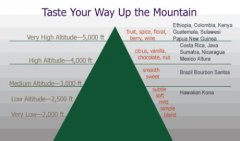
Effect of altitude on Coffee Flavor basic knowledge of Coffee
The influence of geographical location on the flavor of coffee beans is profound. All coffee grows in the tropics, and the altitude at which it grows has a profound effect on the taste of coffee. The tropical belt extends from 30 degrees north latitude to the equatorial regions of the southern mountains that produce the world's truly high-quality Arabica coffee. Central and South America, South Asia and some Pacific islands, south-central Africa is also the most important in the world.
The legendary background of modern coffee Papua New Guinea
In Papua New Guinea, about 75 per cent of coffee products come from small local farmers

The development history of Papua New Guinea
The legendary background of modern coffee. In Papua New Guinea, about 75 per cent of coffee products come from small local farmers
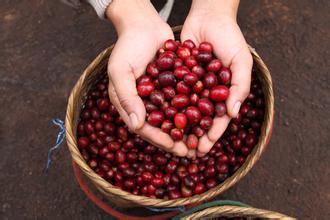
Boutique Coffee Chateau Kimmel Manor Papua New Guinea
The legendary background of modern coffee. In PapuaNewGuinea, about 75 per cent of coffee products come from small local farmers

Effect of coffee bean planting altitude on coffee flavor
The impact of location on coffee bean flavor is profound. All coffee is grown in the tropics, and the altitude at which it is grown has a profound effect on the taste of coffee. The equatorial regions of the tropical belt, which extends from 30 degrees north latitude to the southern mountains, produce the world's truly premium Arabica coffee. Central and South America, South Asia and some Pacific islands, South Central Africa is also the world's most important